Day 1
You will not feel a kick
Creatine is not caffeine. Mix 5 grams with water or food. There is no buzz. The benefit is in what your muscles store, not in the next twenty minutes.
Creatine, 1832 · Ireland now · UK soon
500 g · Unflavoured · 100 servings
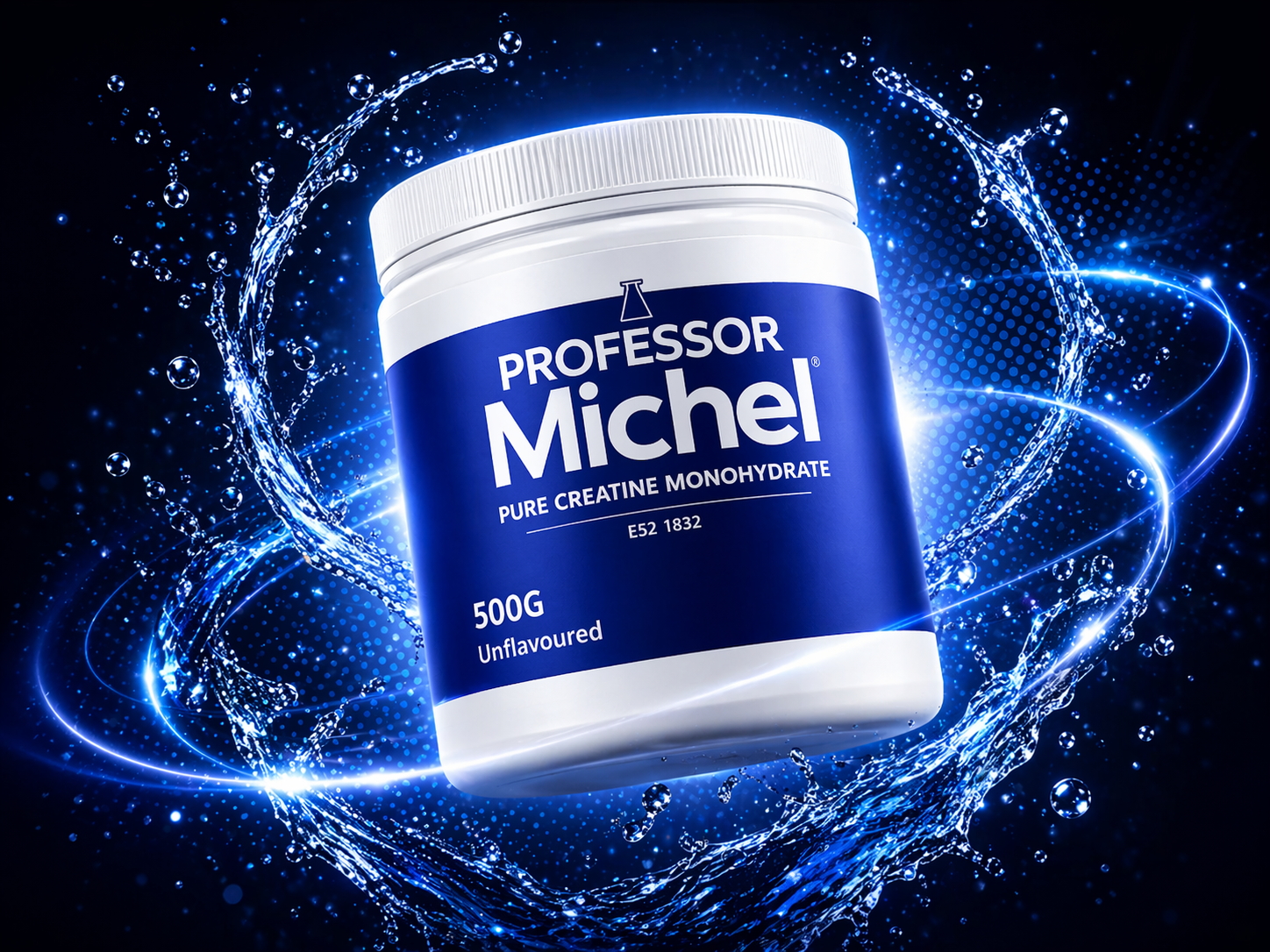
Nothing added. Nothing hidden. No flavours, no colours, no gummies, no blends, no marketing. Just 100% pure creatine monohydrate — 5 g a scoop, 100 servings.
€0.45 a serving · 100 days · free Irish delivery
The problem
Walk the aisle and you are looking at flavour, sweetener, and a story about the next generation. The scoop often holds less creatine than the research used. The label often promises more than a few grams of one molecule can do.
You do not need another flavoured tub. You need to know what you are actually taking — and what it is for. Professor Michel is 500 grams of creatine monohydrate: one hundred servings of 5 grams, with no flavour. It is named after the chemist who identified creatine in 1832. If that sounds simple, that is the point.
Five reasons to buy this one.
Five reasons
01
A full 5 grams, every day, from one scoop.
Most people already know creatine works. What they cannot tell from a typical tub is whether they are actually getting enough of it. A lot of products sold as creatine are mostly flavouring, with only a couple of grams of the real thing in each scoop.
This scoop is 5 grams of creatine monohydrate. That is the daily amount used in the sports-nutrition research. The performance claim is based on 3 grams a day, so one scoop covers it. There is no second product to buy, and no proprietary blend to decode.
02
Newer versions sound more scientific. The evidence is still on this one.
You will see creatine hydrochloride, buffered creatine, nitrates and gummies. They are newer, often more expensive, and much less studied. Creatine monohydrate is the form used in the large majority of human trials. Sports-nutrition researchers still treat it as the standard for high-intensity work.
That is what we sell. It is ground fine (200 mesh) so it mixes in water with less grit. Finer powder does not make a stronger creatine — it just sits in the glass more easily. We will not pretend otherwise.
03
€0.45 a serving. Not two euro for a sweet drink with creatine in it.
Flavour, colour and sweeteners take up space in the scoop and give a brand something to talk about besides the gram weight. This powder tastes like creatine in water. Stir it into whatever you already drink.
Unflavoured is not a lack of effort. It is how you keep the serving honest. If you want raspberry, add fruit. We will not sweeten a compound that does not need it and then charge you for the privilege.
04
Michel-Eugène Chevreul, 1832. His name is on the Eiffel Tower.
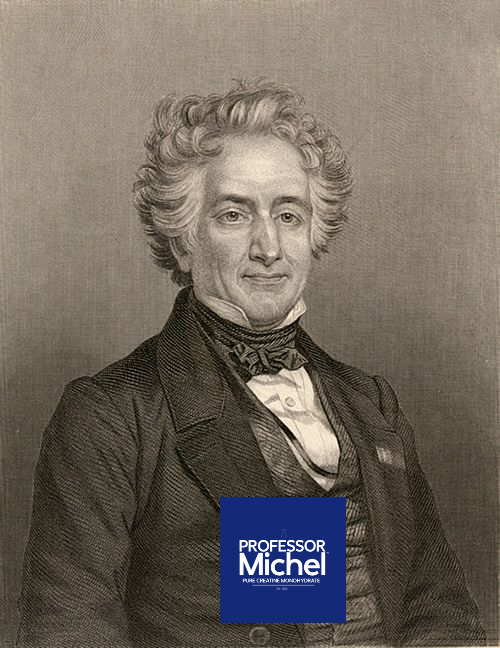
In 1832 the French chemist Michel-Eugène Chevreul isolated creatine from meat extract and named it from the Greek word for flesh. His name is one of 72 inscribed on the Eiffel Tower. He lived to 102, and in old age he made a point of taking apart fashionable nonsense.
We took the name because that is the standard: find the molecule, name it, and do not decorate it. The history is why the scoop should be trusted — not a mascot stuck on a generic tub.
05
That is what creatine is for.
Creatine is the reserve your muscles use when the effort is short and it has to happen again. A sprint. A heavy set. A repeated burst of hard work. Creatine increases physical performance in successive bursts of short-term, high-intensity exercise. That is not a slogan. It is what the molecule does, at a few grams a day.
If you are over 55 and you already lift, there is a second, quieter gift. Daily creatine can enhance the effect of that training on muscle strength. It does not replace the work. It sits next to it. We will not add fat-loss, brain-boost, or miracle lines on top. This is what creatine does. That is enough.
How to buy
Irish delivery €4.99. Prices include VAT. Subscribe arrives every 12 weeks — pause or cancel by emailing us. The UK is coming soon.
What happens after you start
Day 1
Creatine is not caffeine. Mix 5 grams with water or food. There is no buzz. The benefit is in what your muscles store, not in the next twenty minutes.
Weeks 1–3
Taken every day, muscle creatine rises over a few weeks. A small increase on the scales — often 1–2 kg — is water inside the muscle, not fat. You can skip a loading phase if your stomach prefers the slower route.
Week 4
At 5 grams a day the reserve is in. That is when the next sprint, the next set, the next burst has something behind it. The powder does not replace the work.
Take one scoop every day, including rest days. A loading phase is optional and harder on the stomach. Creatine is not a substitute for training, and it is not a stimulant.
Who this is for
Who this is not for
How we compare
| Professor Michel | Typical creatine | |
|---|---|---|
| What's in the serving | 5 g creatine monohydrate | Often less creatine than it looks, mixed with other things |
| Other ingredients | None | Flavourings, sweeteners, anti-caking agents |
| What it does | The next sprint, the next set, the next burst — and, after 55, more from the lifting you already do | Whatever sounds true in an advert |
| The name | Named after the chemist who identified creatine in 1832 | A logo and a slogan |
Why the name
Michel-Eugène Chevreul did not invent creatine. He found it in meat extract and gave it a name — from the Greek for flesh.
He lived to 102. In old age he spent his time taking apart fashionable nonsense. That is why the brand is named after him: identify the molecule, and do not dress it up. The history is a reason to trust the scoop — not a costume on a generic tub.
Read the professorThe evidence
Creatine increases physical performance in successive bursts of short-term, high-intensity exercise.
That is the next sprint, the next set, the next burst. Creatine monohydrate is one of the most researched sports supplements in the world. We did not fund those trials. We sell the same molecule they used, at 5 grams a scoop.
Daily creatine consumption can enhance the effect of resistance training on muscle strength in adults over the age of 55. It does not replace the work. It sits next to it.
5 g
Every scoop — the daily dose used in the research
3–4 wks
Until muscle stores are full, taken every day
55+
If you already lift, daily creatine can enhance the effect of that training on muscle strength
1832
The year Chevreul identified creatine. We named the brand after him.
Before you buy
Bloating, hair, kidneys, loading, women, GAA, the brain. Straight answers here — and a longer list on the questions page, written for the 11pm search.
For the next sprint, the next set, the next burst. €44.99 including VAT. €0.45 a serving. Irish delivery €4.99 — the UK is coming soon. Unopened tubs can be returned within 30 days.